Battery testing
Know what failed before replacing parts
A no-start can come from the battery, a poor connection, or the charging system. Testing helps identify the likely cause before you approve work.
Useful checks at the vehicle
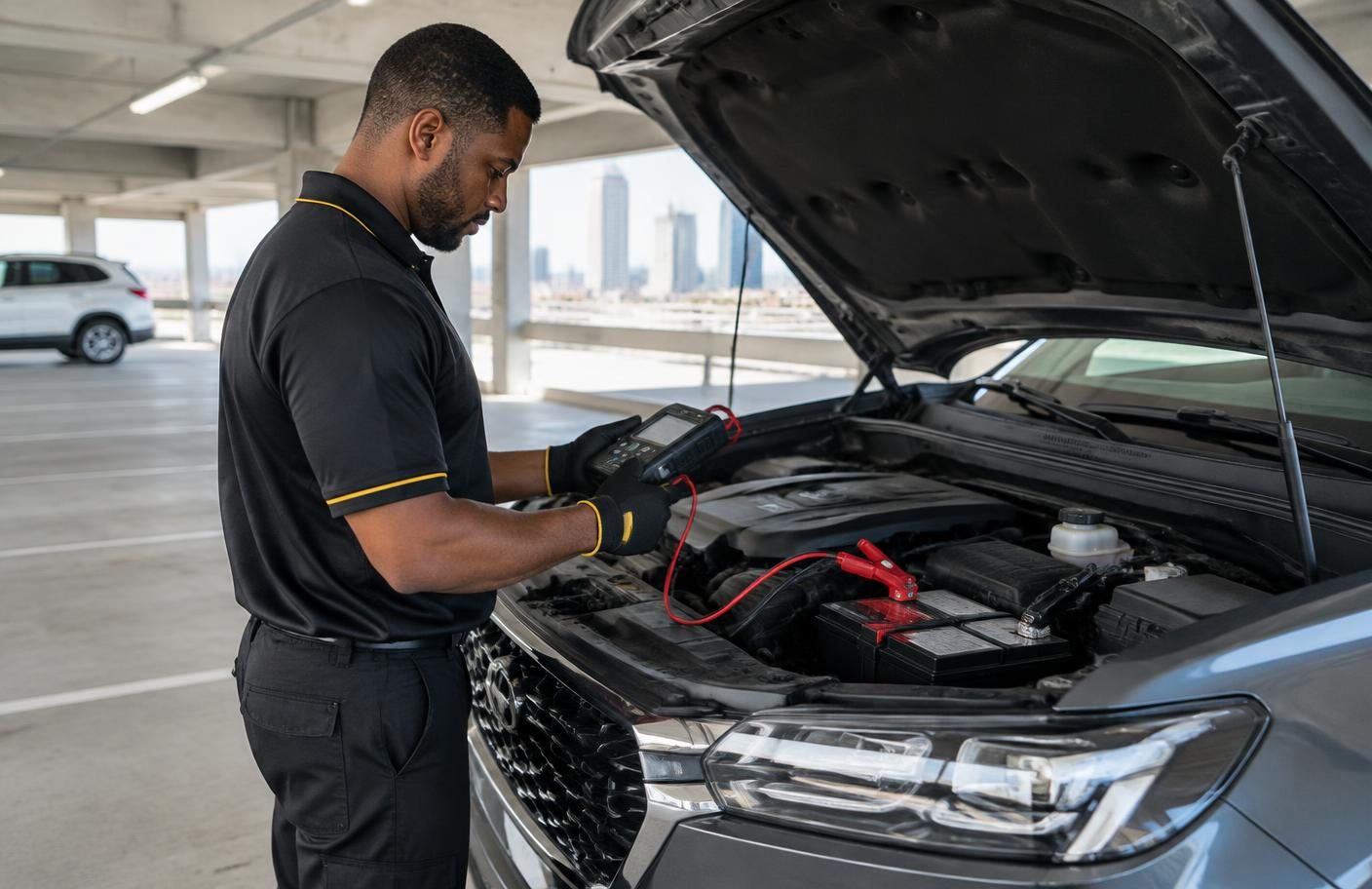
- Resting battery voltage
- Starting and cranking behavior
- Charging voltage with the engine running
- Visible terminal corrosion or loose connections
- Battery age and physical condition
- Clear explanation of the test result
What test results can tell you
Discharged
The battery may need charging or a jump before its condition can be evaluated fully.
Weak or failed
Low capacity or poor cranking performance may support a replacement recommendation.
Battery appears serviceable
A no-start may involve connections, charging, starter, security, fuel, or another system.
Why more than one reading matters
Resting voltage describes state of charge at that moment, but a battery can still fall short when the starter demands high current. Cranking behavior and a suitable performance test add context that an unloaded voltage reading cannot provide alone.
If the engine starts, charging voltage adds another piece of evidence. An abnormal result can point away from a simple battery-only solution. Intermittent faults and deeper electrical problems may still require shop-based diagnostic equipment.
- Slow or uneven cranking
- Rapid clicking or one heavy click
- Lights dim sharply during a start attempt
- The vehicle starts after a jump but fails again
- Battery or charging warning lights
- Recent battery replacement or electrical work