Jump-start service
A safe boost at your vehicle
If the battery was drained by lights, weather, or time parked, an on-site jump may get the vehicle moving without an immediate replacement.
What happens on arrival
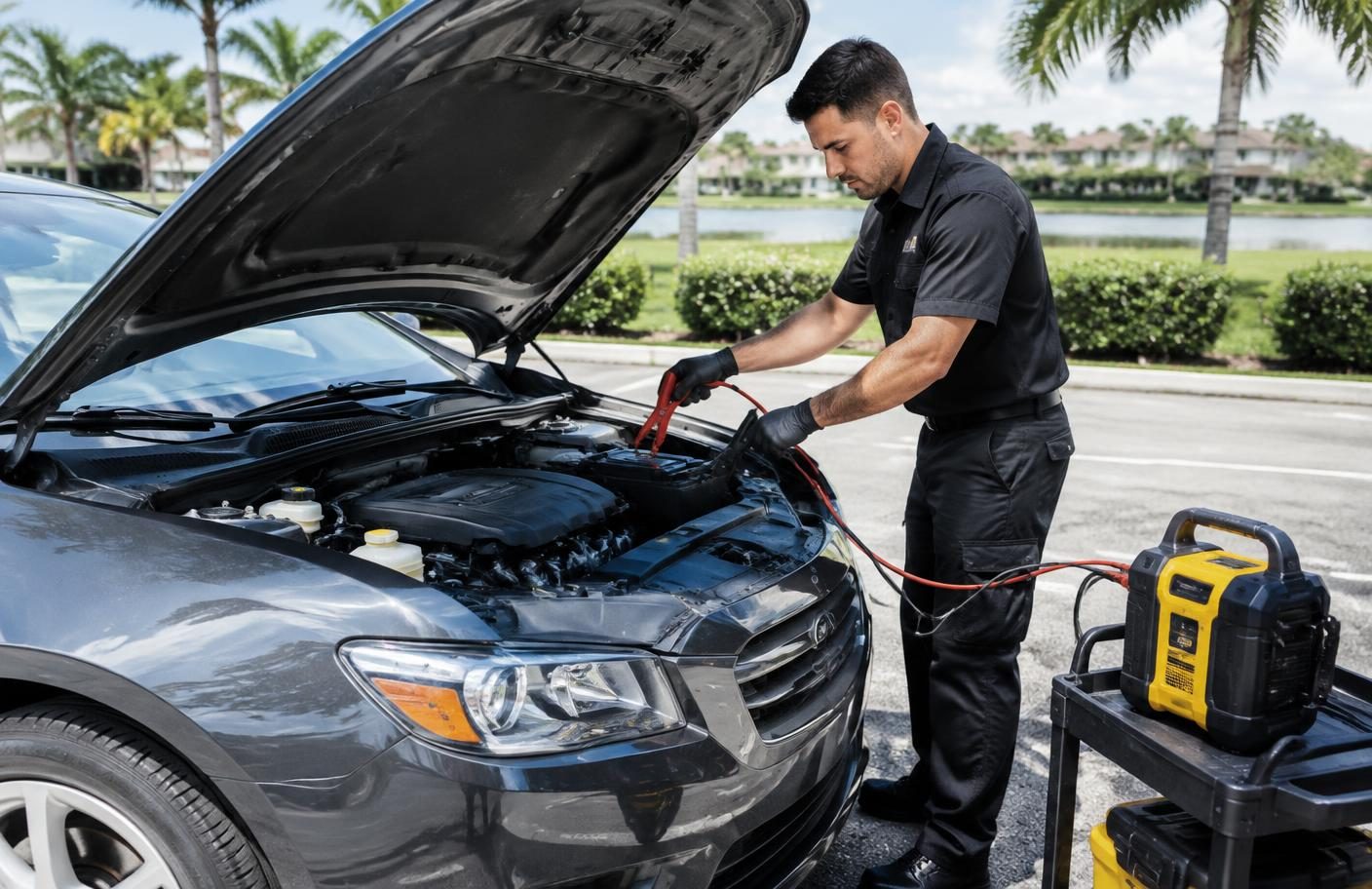
- Visual battery and cable check
- Safe connection using professional equipment
- Start attempt and basic charging check
- Clear next-step guidance if the battery will not hold
- Service at accessible homes, offices, garages, and parking lots
- No tow required for a straightforward discharged battery
A jump start is not a battery repair
A successful jump shows that added electrical power allowed the engine to start. It does not prove the battery is healthy or that the charging system is working correctly.
If the vehicle needs repeated jumps, cranks slowly after driving, or shuts down again, testing may identify a weak battery, charging problem, poor connection, or a fault outside the scope of mobile battery service.
The vehicle owner's manual controls the correct connection points and procedure. Some vehicles use remote terminals or have sensitive electronics that make improvised connections a poor choice.
When not to attempt a jump
- The battery is cracked, leaking, swollen, frozen, or unusually hot
- There is smoke, a strong odor, sparking, or damaged wiring
- The vehicle is in an unsafe traffic position
- The manufacturer prohibits conventional jump-start procedures
- A hybrid or electric vehicle warning requires specialized service
- The battery location cannot be reached safely